The Ripple Effect of Funding Methods on Welcome Structures Across Reel, Table, and Live Dealer Options in Digital Formats
Written by Freya Flores · Jul 25, 2026

The Ripple Effect of Funding Methods on Welcome Structures Across Reel, Table, and Live Dealer Options in Digital Formats
Data from state-regulated platforms shows that funding method selection directly shapes welcome bonus parameters for slots, table games, and live dealer formats, with variations in deposit speed, processing fees, and verification requirements creating distinct incentive layers. Observers note that credit card deposits often trigger standard bonus matches capped at certain thresholds, whereas e-wallet options frequently unlock accelerated release schedules or reduced wagering multipliers on reel-based titles. Bank transfers, by contrast, align with higher deposit tiers that expand bonus eligibility across table game categories.
How Deposit Channels Alter Bonus Mechanics
Payment processing times influence initial bonus activation windows, since instant methods like digital wallets enable immediate play on progressive reel games while slower bank wires delay access to accumulating prize pools. Figures from July 2026 platform reports indicate that users selecting cryptocurrency options encounter bonus structures with elevated maximum caps but stricter identity checks that extend the onboarding sequence before live dealer tables become available. Those patterns emerge consistently across multiple jurisdictions where regulators track transaction data to monitor promotional compliance.
Fee structures attached to each method further modify net bonus value, because platforms adjust contribution percentages differently for slots versus table games depending on the funding source. Credit transactions typically carry merchant fees that operators offset by lowering reel game weightings in bonus terms, whereas fee-free e-wallet routes allow fuller allocation toward live dealer blackjack or roulette sessions. Research from industry tracking services reveals these adjustments maintain operator margins while still presenting users with varied entry points into welcome packages.
Game-Specific Impacts Across Reel, Table, and Live Dealer Formats
Reel games respond most visibly to funding method choices, since high-volume slot play benefits from rapid reloads that compound welcome match amounts into extended spin sessions. Table game bonuses, however, often incorporate game-type exclusions or reduced contribution rates when funded through certain processors, limiting how quickly players convert deposit incentives into playable chips on blackjack or baccarat. Live dealer environments add another variable because real-time interaction requires stable funding confirmation, which favors methods with built-in verification layers that simultaneously qualify users for dealer-specific bonus tiers.
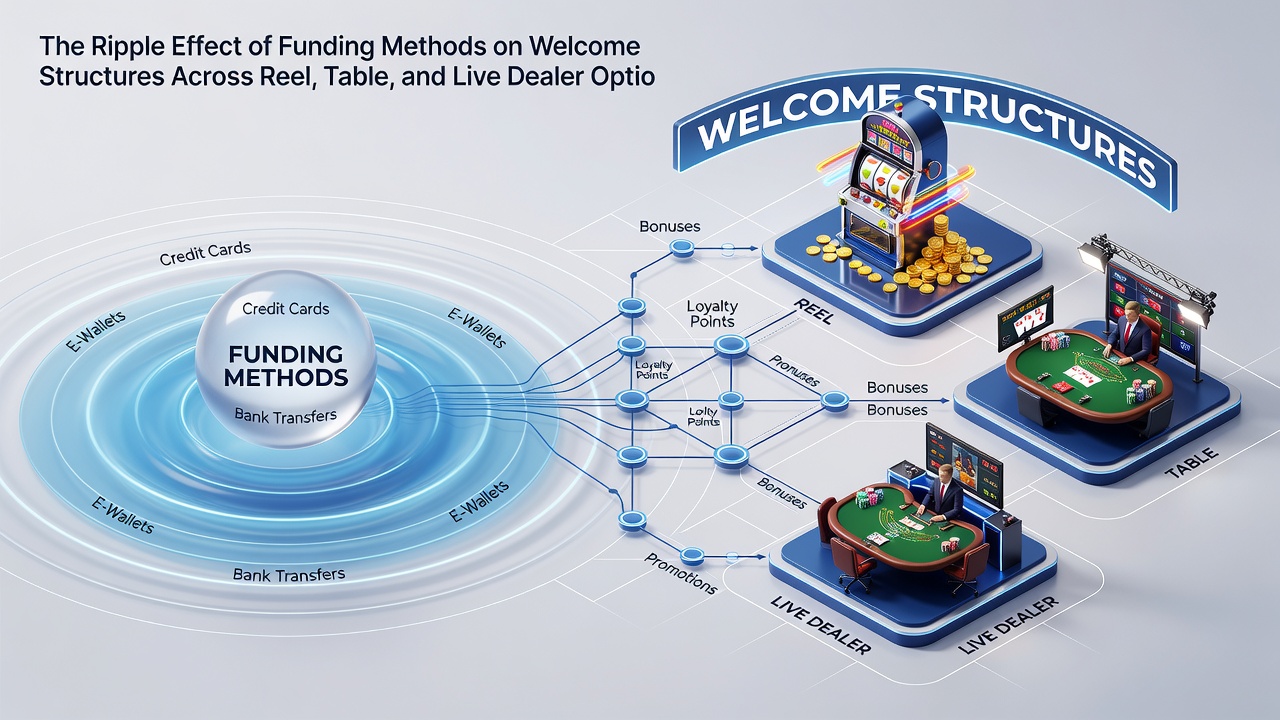
Platform operators adjust these structures according to regional rules, and data compiled through July 2026 demonstrates measurable differences in average bonus redemption rates tied to payment categories. One analysis of aggregated transaction records found that e-wallet funded accounts recorded higher engagement with live dealer options within the first 48 hours, while credit-funded accounts showed stronger retention on reel progressives over longer periods. Such outcomes stem from the technical compatibility between funding rails and the backend systems that govern bonus release schedules.
Regulatory Context and Platform Adaptations
State licensing bodies require transparent disclosure of how each accepted payment method affects promotional eligibility, prompting operators to publish detailed tables that map deposit types to bonus parameters for all three game categories. These disclosures help users anticipate the effective value of welcome offers before committing funds. According to American Gaming Association research, transaction volume through alternative methods has grown steadily, pushing platforms to refine bonus architectures so that no single funding channel dominates access to accumulating rewards.
Additional oversight from bodies such as the Nevada Gaming Control Board enforces consistent application of these rules across digital formats, ensuring that changes in funding availability do not inadvertently alter the advertised terms for reel, table, or live dealer play. Platforms respond by segmenting bonus pools internally, allowing each payment method to feed into tailored welcome structures without violating uniformity requirements. This segmentation produces the observable ripple effects that appear in user behavior metrics tracked monthly.
Conclusion
The interplay between funding methods and welcome structures continues to evolve as new payment technologies integrate with regulated platforms. Evidence collected through mid-2026 confirms that deposit channel characteristics shape bonus accessibility, contribution weighting, and redemption timelines differently across reel, table, and live dealer options. Operators maintain compliance by aligning these mechanics with existing regulatory frameworks while users navigate the resulting variations to match their preferred game formats and deposit preferences. Ongoing data collection from multiple jurisdictions will document further adjustments as transaction ecosystems expand.