How State Rules Guide the Growth of Layered Rewards from First Deposits into Ongoing Play Cycles on Handheld Casino Platforms
Written by Dana Braun · Aug 24, 2026
How State Rules Guide the Growth of Layered Rewards from First Deposits into Ongoing Play Cycles on Handheld Casino Platforms
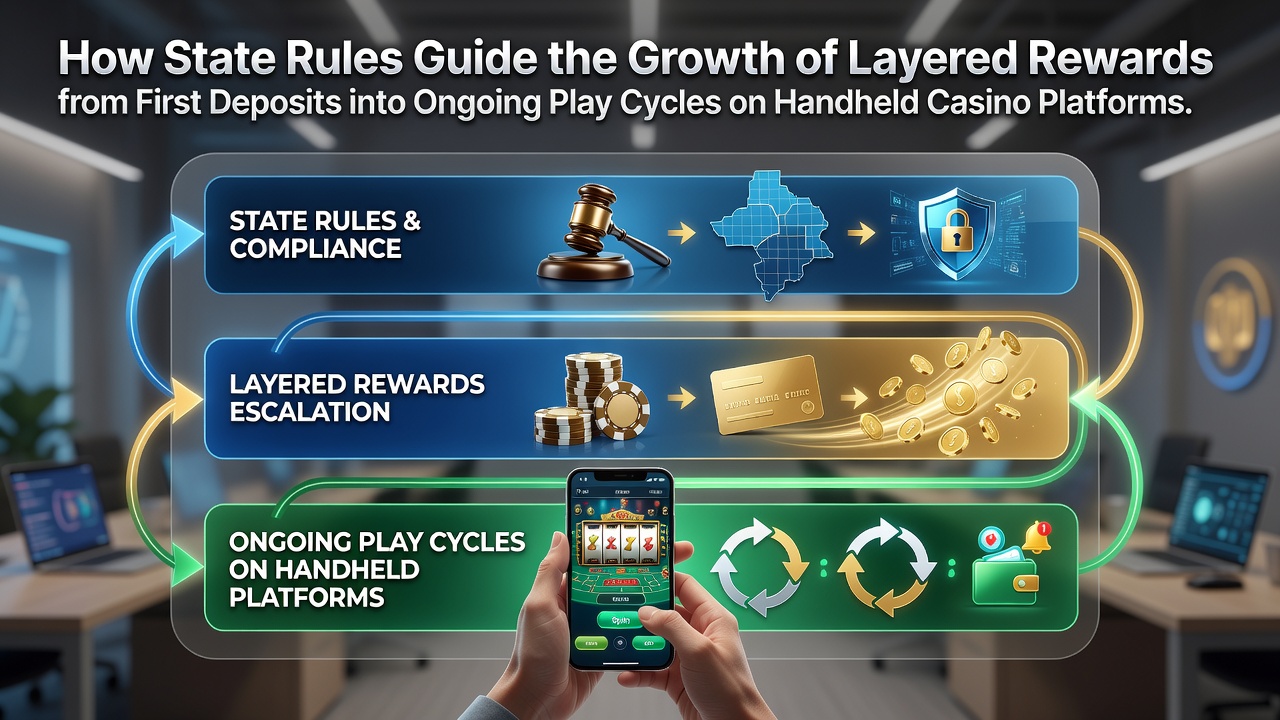
State gaming commissions establish precise parameters that determine how operators convert an initial deposit into multi-stage reward sequences on mobile applications. These parameters cover wagering multipliers, eligibility windows, and contribution rates for different game types, which together create the scaffolding for rewards that expand from welcome incentives into recurring play cycles. Data from licensed platforms in regulated markets shows consistent patterns where deposit-triggered bonuses feed into loyalty tiers only when operators meet state-mandated transparency and fairness thresholds. Regulatory bodies in New Jersey, Pennsylvania, and Michigan require operators to publish clear terms that prevent reward structures from resetting abruptly after the first cycle completes. Such rules force platforms to design bonus progressions that carry forward partial progress across sessions rather than terminating at arbitrary cutoffs. Observers note that these continuity mandates encourage developers to integrate real-time tracking systems that adjust reward accrual based on cumulative activity while remaining compliant with daily loss-limit provisions.Deposit Activation Rules and Initial Reward Layers
State licensing agreements specify minimum return-to-player percentages and maximum house-edge disclosures that directly influence how much of a first deposit converts into playable bonus funds. In practice, operators allocate portions of the deposit amount into matched credits whose release depends on meeting state-defined playthrough thresholds across slots, tables, and live dealer formats. These thresholds often require 20x to 40x wagering on bonus amounts, with different game categories contributing at rates set by regulators to balance revenue generation against player retention goals.
Platforms must also embed geofencing and identity verification steps at the deposit stage, which creates a verified user profile that later supports layered loyalty tracking. This verified status allows subsequent deposits to trigger additional reward tiers without restarting the entire cycle, provided the operator maintains compliance records that state auditors can review on demand.
Progression Mechanisms Across Ongoing Play Cycles
Once the first deposit cycle begins, state rules require operators to display real-time progress toward unlocking the next reward layer. These displays include remaining wagering requirements, time-bound expiration alerts, and game-type contribution breakdowns. Because regulators prohibit hidden conditions that could void earned progress, developers build mobile interfaces that sync deposit history with ongoing play data, allowing players to move seamlessly from welcome bonuses into cashback or free-spin programs tied to weekly activity metrics.
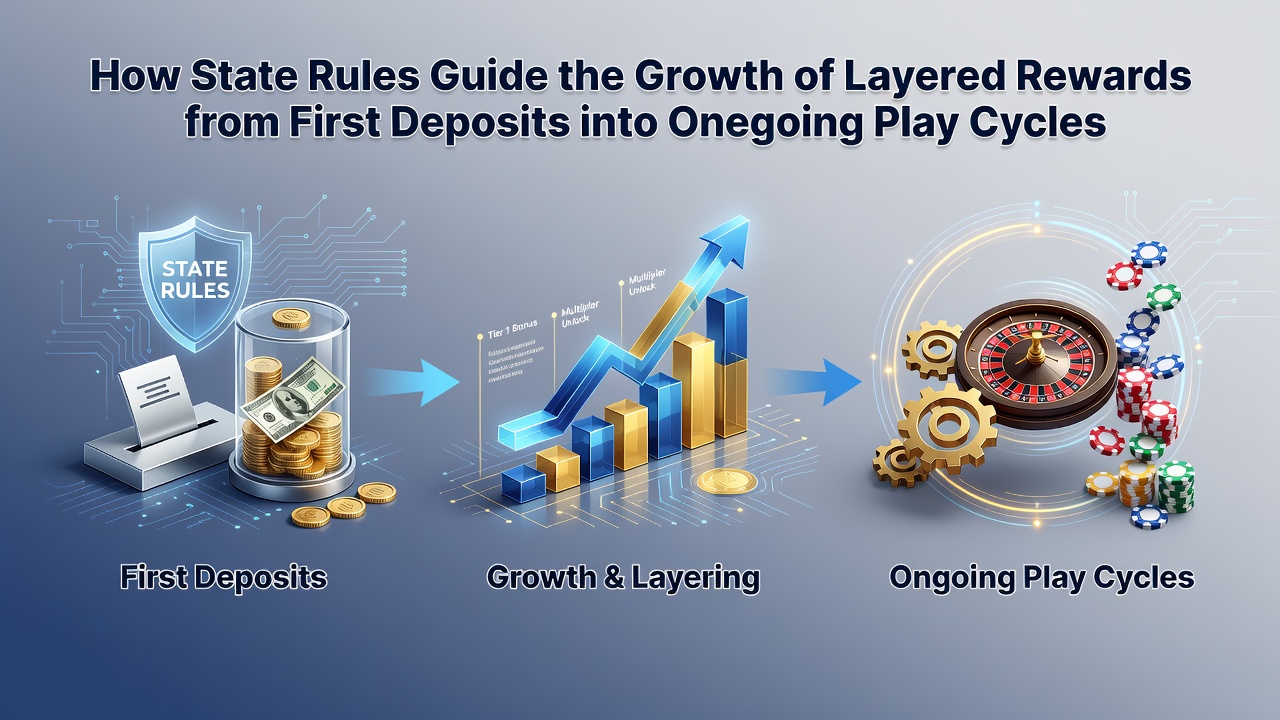
Research from the Pennsylvania Gaming Control Board indicates that platforms operating under these transparency mandates experience higher session frequency because players can visualize how current spins or hands advance them toward the next tier. The same framework prevents operators from resetting loyalty points at the end of a calendar month without carrying forward qualifying activity, which sustains engagement loops across multiple weeks.
Compliance Monitoring and Adjustment of Reward Structures
Monthly reporting obligations imposed by state commissions require operators to submit aggregated data on bonus redemption rates, average cycle lengths, and player retention following initial deposits. Analysts at the Massachusetts Gaming Commission use these submissions to identify patterns where reward layering either supports or undermines responsible gaming targets. When data reveals excessive concentration of play within the first 72 hours after deposit, regulators may direct operators to extend eligibility windows or cap single-session bonus releases.
These oversight mechanisms create feedback loops that refine how layered rewards evolve. Operators adjust contribution percentages for live dealer games versus slots, for example, after state reviews highlight imbalances that could accelerate loss rates among newer accounts. The resulting structures maintain regulatory approval while supporting extended play cycles that span both weekday and weekend sessions on handheld devices.
Conclusion
State rules function as the structural framework that converts a single deposit event into sustained reward sequences across mobile casino platforms. By dictating wagering terms, progress tracking, and reporting standards, regulatory bodies ensure that operators design systems capable of carrying players through multiple engagement stages without abrupt termination. Figures from licensed markets in 2026 continue to show that platforms adhering to these layered compliance requirements maintain consistent user activity patterns from August onward, with reward progression tied directly to documented regulatory parameters rather than discretionary operator choices.