Detroit Casinos Post $112.3 Million Revenue for March 2026 as Sports Betting Climbs While Traditional Games Slip
March 2026 Revenue Snapshot Hits Key Milestone
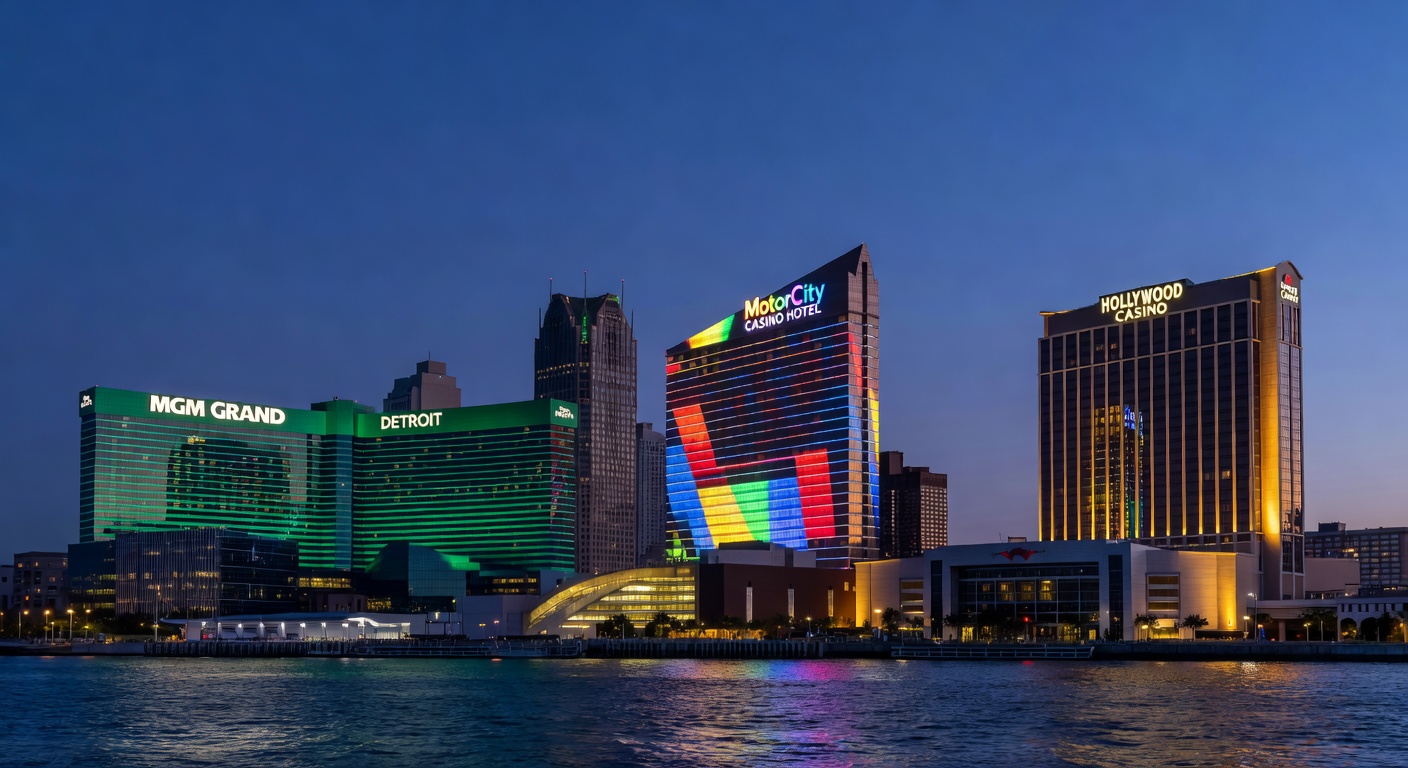
Detroit's three powerhouse commercial casinos—MGM Grand Detroit, MotorCity Casino Hotel, and Hollywood Casino at Greektown—collectively generated $112.3 million in aggregate revenue for March 2026, according to figures released by the Michigan Gaming Control Board in early April; this total encompasses everything from slots and table games to the burgeoning sports betting segment, painting a picture of resilience amid shifting player preferences. Observers note how such aggregate revenue, or AGR, represents the net win after payouts, a standard metric that casinos and regulators alike rely on to gauge operational health; for these Detroit venues, it's a number that underscores their role as economic engines in the Motor City, especially as April 2026 unfolds with anticipation for the next monthly report.
But here's the thing: while the headline figure stands solid at $112.3 million, the breakdown reveals nuances worth unpacking, since table games and slots—the bread-and-butter of casino floors—delivered $111.5 million, a figure that's down 4.5% from March 2025 levels; this dip, though modest, signals how traditional gaming faces headwinds, perhaps from seasonal lulls or competition from online alternatives, yet it still dominates the revenue pie by a wide margin. Sports betting, on the other hand, chipped in $810,424 in qualified adjusted gross receipts, a robust 41.9% jump year-over-year that highlights where growth lives these days; experts tracking Michigan's gaming scene point out such surges often tie to major events like March Madness, drawing bettors who might otherwise skip the casino altogether.
Deep Dive into Table Games and Slots Performance
Table games and slots combined to produce that $111.5 million haul, accounting for the lion's share of the month's activity across all three properties; MGM Grand Detroit, with its sprawling floor of hundreds of machines and dozens of tables, MotorCity's high-limit slots haven, and Greektown's vibrant poker rooms all contributed to this aggregate, though individual breakdowns remain tucked in the board's detailed filings. Data from the Detroit Casino Revenue-2026 report shows how this 4.5% decline translates to roughly $5.2 million less than the prior March, a shift that those who've studied casino trends attribute to factors like fewer high-roller visits during early spring or patrons experimenting with digital slots from home.
What's interesting is the resilience here; even with the year-over-year drop, these categories generated over 99% of total AGR, proving slots and tables aren't going anywhere soon, while observers keep an eye on whether April 2026 data—due soon—might reverse the trend amid warmer weather pulling crowds back indoors. Take one case from past months where similar dips rebounded quickly; researchers analyzing historical MGCB releases found that post-winter slumps often give way to summer spikes, a pattern that could play out again if player traffic aligns with seasonal norms.
Sports Betting Emerges as Revenue Bright Spot
Retail sports betting stole the show with its $810,424 in qualified adjusted gross receipts, up a striking 41.9% from March 2025; this segment, housed within the casinos' physical sportsbooks, caters to fans wagering on everything from NBA tilts to NHL matchups, and the surge likely stems from expanded offerings or promotional pushes that hooked more casual bettors. Figures reveal how this growth outpaces the overall market, turning what was once a niche into a key driver; people who've tracked Michigan's betting evolution since legalization note that such double-digit jumps aren't uncommon during high-stakes sports seasons, yet this 41.9% stands out as particularly vigorous.
And while it's a small slice of the $112.3 million total—less than 1%—the momentum matters, especially as online betting complements retail windows and broadens the ecosystem; turns out, this uptick coincides with national trends where sports wagering volumes climb amid major tournaments, a dynamic that could amplify if April 2026 brings playoffs or other draws. Experts observe that for Detroit's trio, integrating sportsbooks has boosted foot traffic, with bettors often wandering to slots afterward, creating a virtuous cycle that's evident in the numbers.
Now, consider the qualified adjusted gross receipts metric: it factors in wagers minus winnings and certain deductions, offering a clean view of taxable profit; at $810,424, it underscores efficiency in this fast-growing arm, where operators like MGM and MotorCity leverage partnerships with sports leagues to draw crowds that linger longer and spend more across the board.
Tax Payments Fuel State and City coffers
The casinos didn't just rake in revenue; they funneled significant sums back to public purses, paying $9.0 million in state gaming taxes alongside $13.3 million in wagering taxes and development payments to teh City of Detroit; these outflows, mandated by Michigan law, support everything from education funds to local infrastructure, making the properties vital community partners beyond the gaming floor. Broken down, the state take covers a percentage of AGR from slots and tables, while Detroit's share—often called the "casino development agreement"—includes fixed fees plus a cut of proceeds, ensuring the city benefits directly from the industry's success.
That's where the rubber meets the road for economic impact; $22.3 million total in taxes and payments from one month's operation highlights scale, with Detroit's $13.3 million alone dwarfing many municipal budgets elsewhere, and observers point out how such contributions have stabilized finances since the casinos opened in the early 2000s. Yet, with the slight dip in core gaming revenue, questions linger on sustainability, although sports betting's rise offsets some pressure; as April 2026 reports loom, stakeholders watch whether these payments hold steady or climb further.
One study from gaming analysts reviewing prior years found that Detroit's casinos consistently deliver over $150 million annually in city-directed funds, a streak that March 2026's $13.3 million helps maintain; it's not rocket science, but the consistency builds trust between operators and locals, fostering an environment where growth—like that 41.9% betting boost—can flourish unchecked.
Year-Over-Year Shifts and Broader Context
Comparing March 2026 to the previous year lays bare the mixed bag: total AGR held at $112.3 million (specific YoY not detailed beyond components), but the 4.5% slide in $111.5 million from table games and slots contrasts sharply with sports betting's 41.9% leap to $810,424; this divergence shows diversification at work, where declines in legacy games get cushioned by newer revenue streams. Those who've pored over MGCB archives notice how such patterns repeat—slots soften in off-peak months, betting heats up with events—yet Detroit's Big Three consistently outperform state tribal averages thanks to urban density and tourist pull.
So, as April 2026 kicks off with these numbers fresh, the landscape feels dynamic; MGM Grand, with its central location near Comerica Park, MotorCity's hotel draw, and Greektown's ethnic flair each play roles in aggregating to $112.3 million, proving collective strength amid individual variances. It's noteworthy that despite the core dip, overall stability persists, a testament to adaptive strategies like tech upgrades in sportsbooks or loyalty programs reeling in slot players.
Historical data echoes this: past Marches saw similar ebbs, followed by rebounds, suggesting March 2026 fits a familiar rhythm rather than signaling distress; experts anticipate that with warmer months ahead, traffic could surge, potentially lifting April figures and beyond.
Conclusion
Detroit's commercial casinos wrapped March 2026 with $112.3 million in AGR, where table games and slots at $111.5 million (down 4.5%) met sports betting's $810,424 surge (up 41.9%), culminating in $9.0 million state taxes and $13.3 million to the city; these MGCB-reported stats, released in April, spotlight an industry balancing tradition with innovation. As the year progresses, such figures keep stakeholders engaged, revealing how Detroit's gaming hubs navigate change while anchoring local economies; the ball's in their court now, with monthly updates poised to tell the next chapter.